Science-Based Microbial Protection for Homes and Buildings
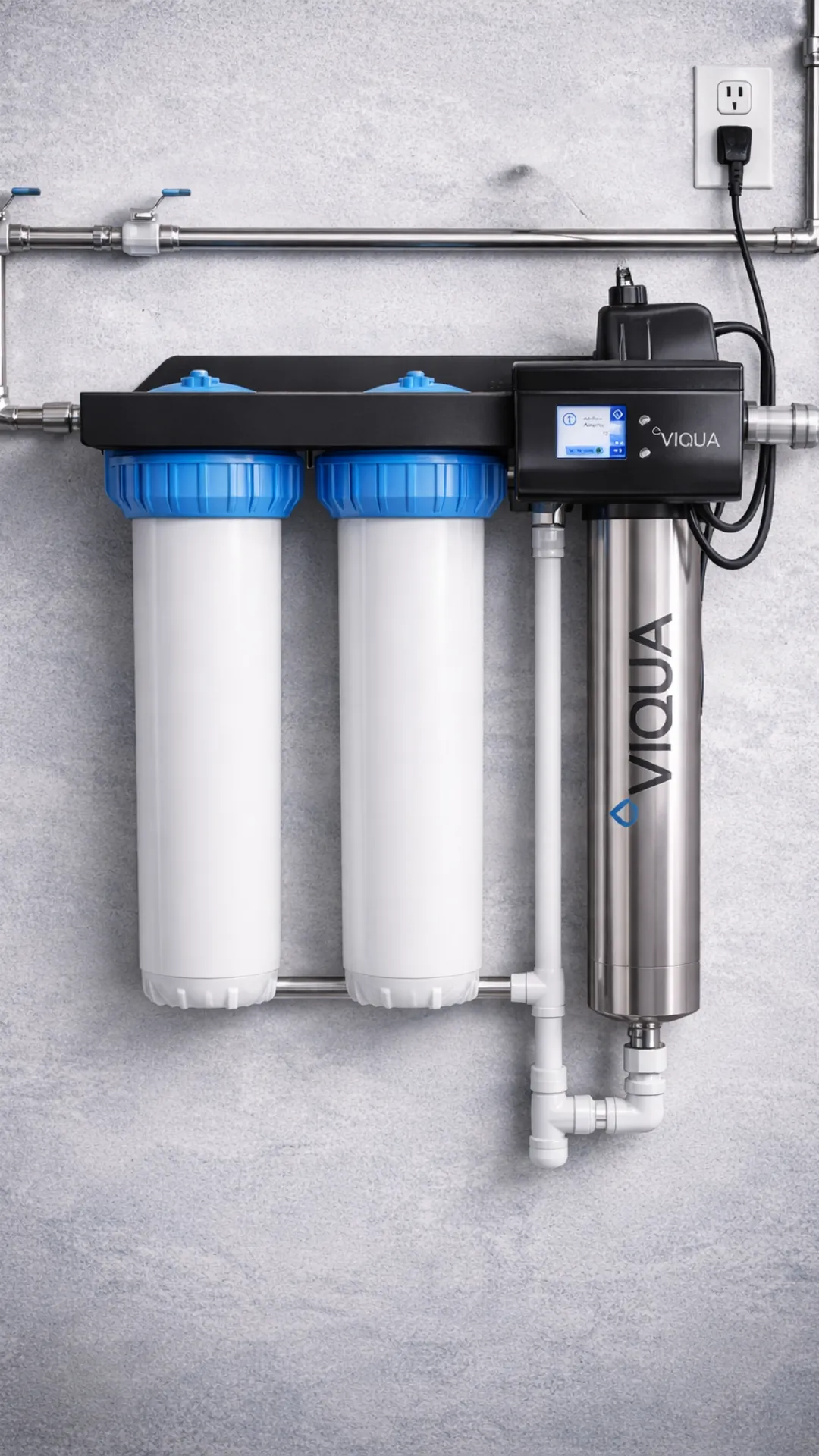
VIQUA UV water treatment systems are designed to disinfect water by neutralizing microorganisms such as bacteria, viruses, and protozoa as water flows through the system.
Science-Based Microbial Protection for Homes and Buildings
VIQUA UV water purification systems are designed to disinfect water by neutralizing microorganisms such as bacteria, viruses, and protozoa as water flows through the system.
What VIQUA UV Water Treaatment Is Designed to Do
VIQUA UV systems use ultraviolet (UV) light to disinfect water without chemicals or additives.
They are commonly used to:
Neutralize bacteria in water
Inactivate viruses
Address protozoa, including chlorine-resistant organisms
Provide continuous, chemical-free disinfection at the point of entry
UV treatment improves water safety, not taste or mineral balance.
What VIQUA UV Water Treatment Is Designed to Do
VIQUA UV systems use ultraviolet (UV) light to disinfect water without chemicals or additives.
They are commonly used to:
Neutralize bacteria in water
Inactivate viruses
Address protozoa, including chlorine-resistant organisms
Provide continuous, chemical-free disinfection at the point of entry
UV treatment improves water safety, not taste or mineral balance.
What UV Water Treatment Means
UV water treatment is a disinfection process.
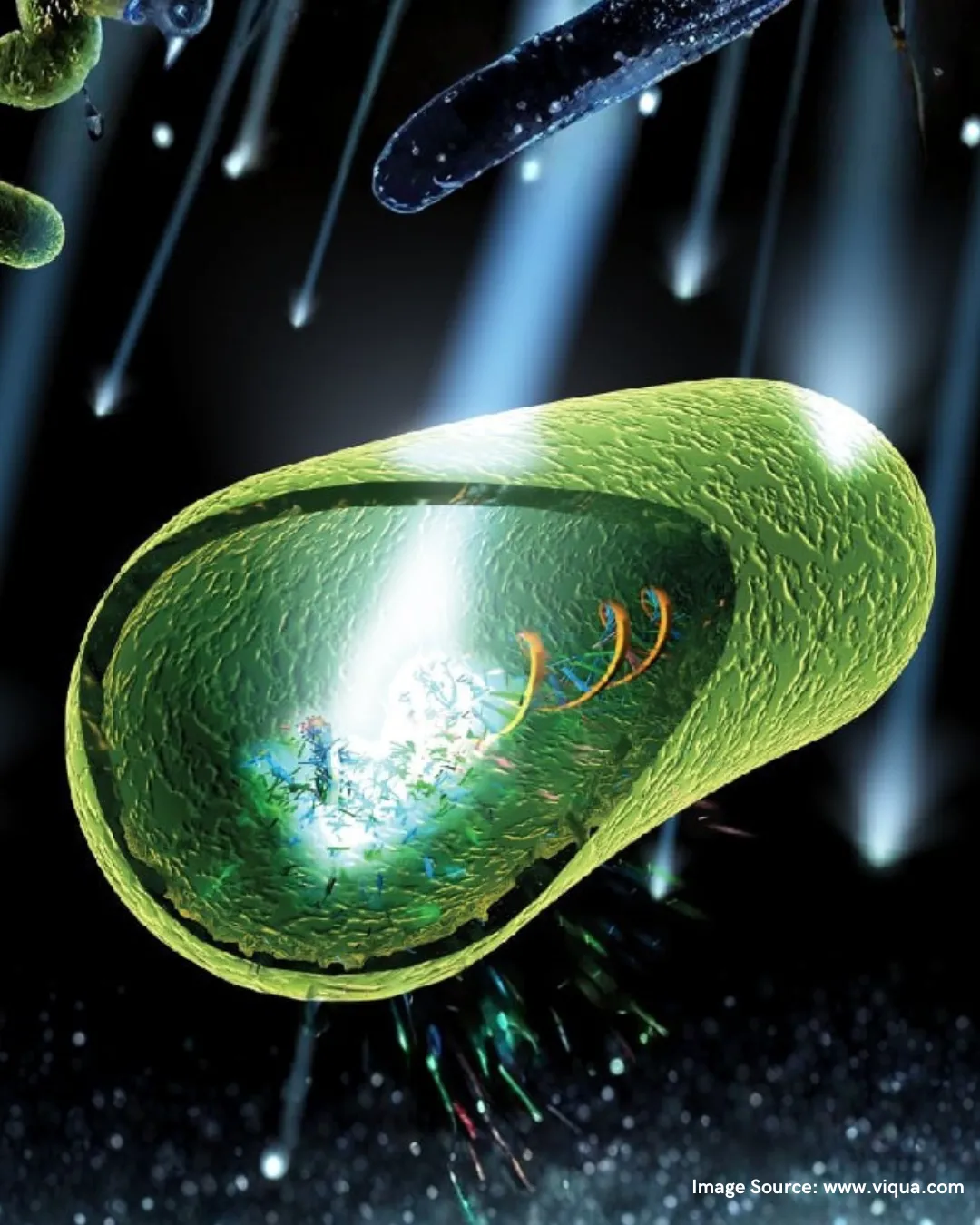
It works by exposing water to ultraviolet light at a specific wavelength that disrupts the
DNA and RNA of microorganisms. Once exposed, these organisms can no longer reproduce
or cause infection.
The UV treatment does not add chemicals, does not change taste, odor, or mineral content,
and does not remove particles or chemicals. It is a final safety barrier, not a filtration method.
What UV Water Treatment Means
UV water treatment is a disinfection process.
It works by exposing water to ultraviolet light at a specific wavelength that disrupts the DNA and RNA of microorganisms. Once exposed, these organisms can no longer reproduce or cause infection.
The UV treatment does not add chemicals, does not change taste, odor, or mineral content, and does not remove particles or chemicals. It is a final safety barrier, not a filtration method.
How VIQUA UV Systems Work
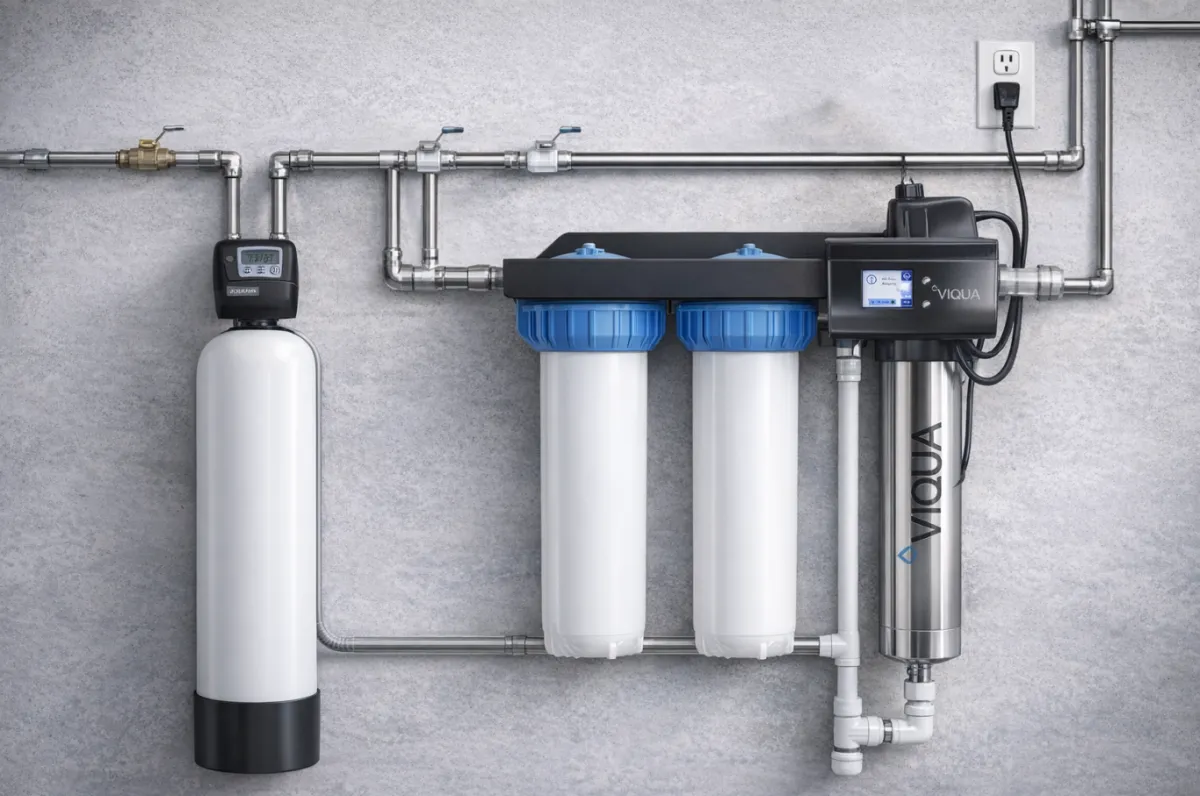
VIQUA UV systems are installed inline with the main water supply or
at a targeted treatment point.
VIQUA UV systems are installed inline with the main water supply or at a targeted treatment point.
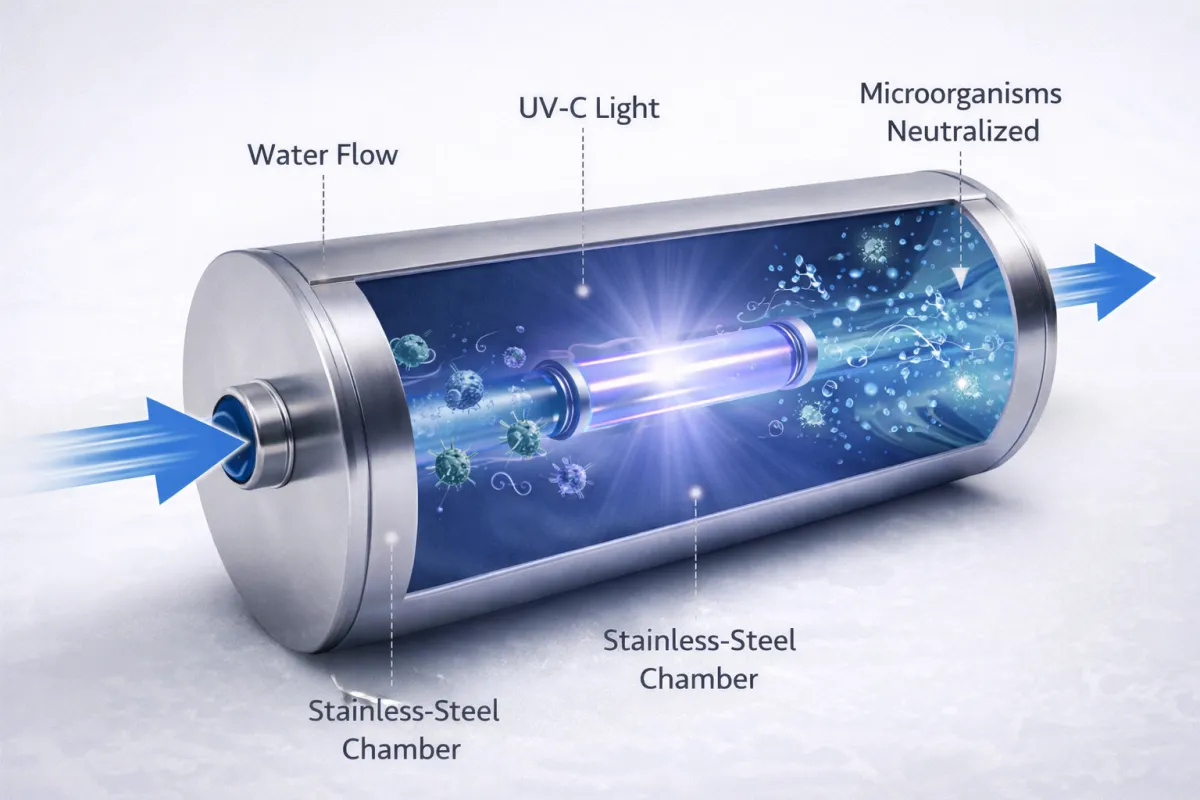
1. Water flows through pre-filtration when required
2. Water enters a stainless-steel UV chamber
3. A UV lamp emits germicidal UV-C light
4. Microorganisms are neutralized as water passes through
5. Disinfected water flows throughout the home or facility
UV effectiveness depends on proper sizing, flow rate, and water clarity, which is why testing and system matching are essential.
TECHNICAL OVERVIEW
VIQUA UV Treatment Systems
The following details are provided for homeowners, facility managers, and professionals seeking technical clarity.
System Type
Ultraviolet (UV-C) water disinfection system
Primary Function
Microbial disinfection of water
Target Contaminants
Bacteria
Viruses
Protozoa (including chlorine-resistant organisms)
Treatment Method
UV-C light disinfection
No chemical addition
Installation Location
Point of entry or specific treatment point
System Construction
Stainless-steel reaction chamber
High-output UV lamp
Water Chemistry Impact
No change to taste, odor, or mineral content
System Compatibility
Designed to integrate with filtration and conditioning systems
Maintenance Requirements
Scheduled UV lamp replacement
Periodic system checks
Pre-filter replacement when applicable
What the Viqua UV Treatment System Does Not Do
Remove PFAS or chemical contaminants
Filter heavy metals such as lead or arsenic
Remove sediment or particulates
Address hardness or scale
Improve taste or odor
Because of this, UV treatment is often paired with filtration or conditioning when testing indicates it is necessary.
What the Viqua UV Treatment System Does Not Do
Remove PFAS or chemical contaminants
Filter heavy metals such as lead or arsenic
Remove sediment or particulates
Address hardness or scale
Improve taste or odor
Because of this, UV treatment is often paired with filtration or conditioning when testing indicates it is necessary.
Why UV Is Often Combined With Filtration or Conditioning
Water quality challenges are best addressed using a layered treatment approach. Depending on test results, a complete system may include:
Filtration to reduce PFAS, chemicals, sediment, or heavy metals
Conditioning to manage hardness and scale
UV treatment to disinfect microorganisms
Each technology performs a specific role.
Nothing is added unless it provides clear, test-based value.
When VIQUA UV Treatment Is a Smart Recommendation
UV Treatment may be recommended when:
Water testing indicates microbial risk
The property uses a private well
Added disinfection is desired as a safety measure
Chemical disinfection is not preferred
Water clarity supports effective UV treatment
In some properties, UV conditioning is not necessary.
Testing determines whether UV adds meaningful protection.
Residential, Commercial, and Light-Industrial Applications
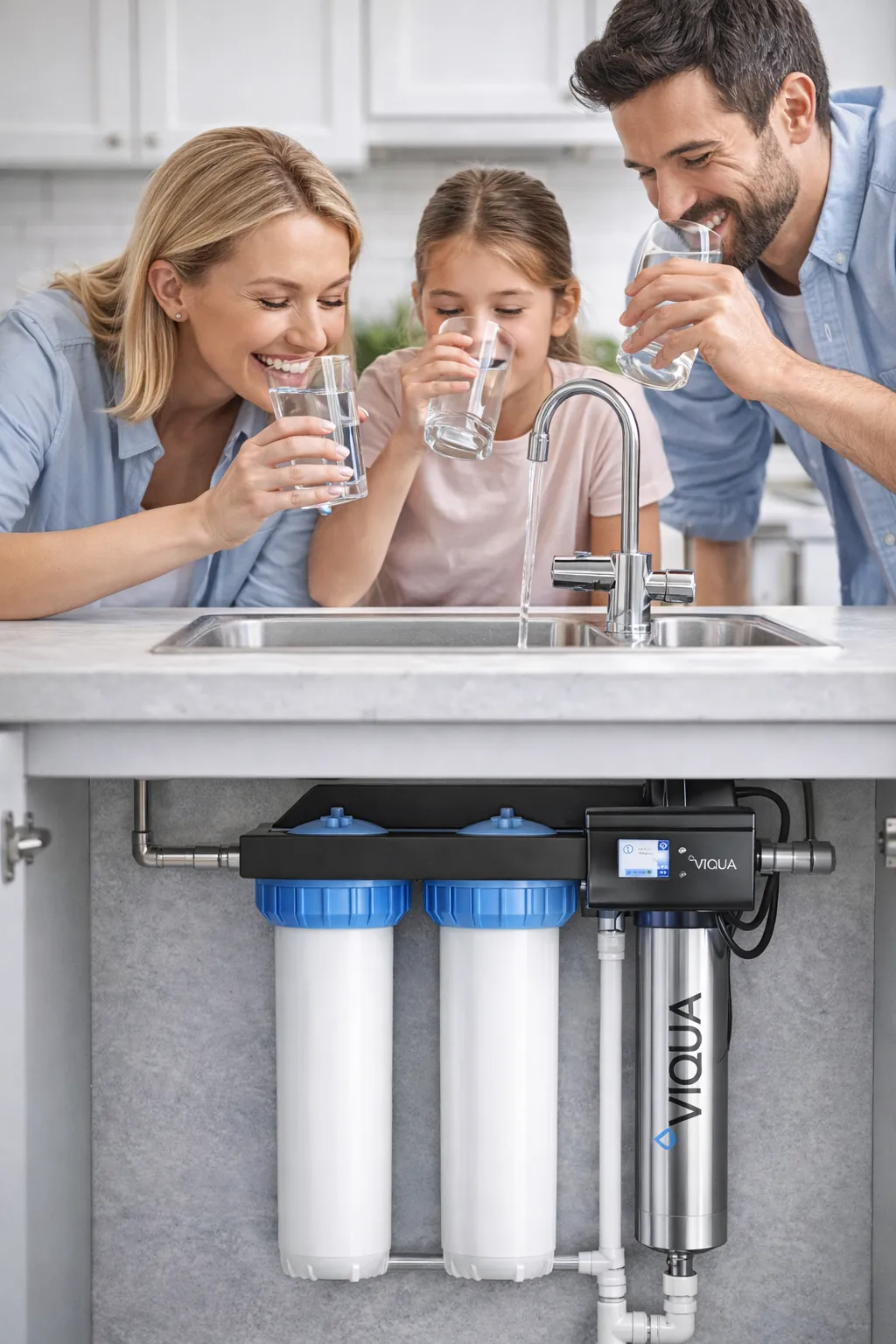
VIQUA UV systems are used in:
Single-family homes
Multi-unit residential buildings
Offices and commercial facilities
Light-industrial and service operations
Properties with private wells or variable water sources
Systems are sized and selected based on actual water usage and flow requirements.
Residential, Commercial, and Light-Industrial Applications
VIQUA UV systems are used in:
Single-family homes
Multi-unit residential buildings
Offices and commercial facilities
Light-industrial and service operations
Properties with private wells or variable water sources
Systems are sized and selected based on actual water usage and flow requirements.
Common Questions About
VIQUA UV Water Treatment
Does UV change the taste of water?
No. UV uses light, not chemicals, so taste and odor remain unchanged.
Is UV enough by itself?
Sometimes. Often, UV works best alongside filtration. Testing determines what is appropriate.
Does UV remove PFAS or chemicals?
No. Chemical reduction requires filtration designed for that purpose.
What if my water is cloudy or has sediment?
Particles can reduce UV effectiveness. Pre-filtration is used when necessary.
Do I need UV if I have city water?
Not always. Municipal systems disinfect already, but conditions vary. Testing provides clarity.
Start With the Water, Not the Equipment
If you are unsure whether UV treatment is appropriate for your home or facility, the first step is to test the water.
Water The Facts provides professional testing, clear explanations, and honest recommendations without pressure.
Water The Facts does not perform installation or plumbing work.
Systems are installed by a licensed plumber of your choice.
Manufacturer warranties are provided directly by the equipment manufacturer.
About
Water The Facts
Charlottesville, VA
Copyright © 2026 Water The Facts
Start With the Water, Not the Equipment
If you are unsure whether UV treatment is appropriate for your home or facility, the first step is to test the water.
Water The Facts provides professional testing, clear explanations, and honest recommendations without pressure.
Water The Facts does not perform installation or plumbing work.
Systems are installed by a licensed plumber of your choice.
Manufacturer warranties are provided directly by the equipment manufacturer.
About
Water The Facts
Charlottesville, VA
Copyright © 2026 Water The Facts